

Pleural Effusion Treatment in Siliguri
Pleural Effusion, also known as “water in the lungs”, is a condition where excessive fluid accumulates between the two thin membranes surrounding the lungs. According to a clinical study conducted by Kookoolis et al. (2015), 15% of the patients with pleural effusion die within 30 days of hospitalization. The number increases further to 32% over 12 months. Dr. Abhishek Bali (MBBS, MD in Respiratory Medicine) offers the best pleural effusion treatment in Siliguri with life-saving fluid removal and accurate root-cause diagnosis.
14 +
Years of Hospital affiliations Experience
5K +
Number of patient
1000+
Successful Recoveries
Academic Achievement: He performed the first-ever Medical Pleuroscopy in North Bengal and Sikkim, and he is currently the Head of the Pulmonology Department at Maxwell Hospital & Research Centre.
Why Choose Dr. Abhishek Bali For Pleural Effusion Treatment?
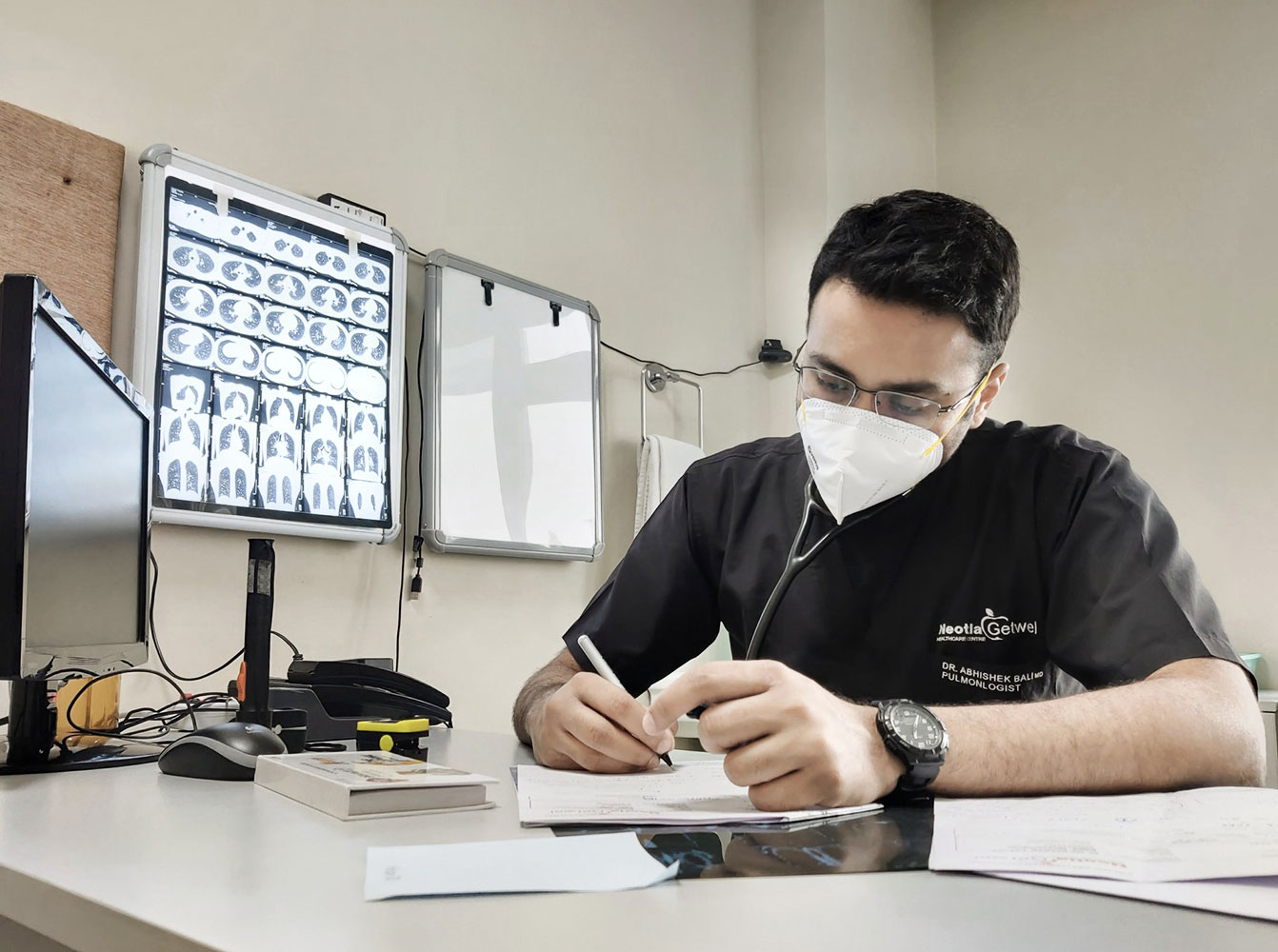
Since pleural effusion involves the risk of severe complications, seeking treatment from a chest specialist is necessary. Dr. Abhishek Bali, a renowned pulmonologist in Siliguri , is widely recognized for offering safe and effective treatment for pleural effusion. He prioritizes accurate root-cause diagnosis over temporary fluid drainage, which ensures that conditions causing pleural effusion, such as tuberculosis, pneumonia, heart failure, or malignancies, are identified early.
Here are the top reasons to choose Dr. Bali:
State-Of-The-Art Infrastructure
He utilizes high-resolution ultrasound for safe fluid drainage.
Focus on the Root Cause
He focuses on addressing the root cause of pleural effusion so that re-accumulation and repeated drainage procedures can be prevented.
Comprehensive Critical Care Support
He is the lead pulmonologist in Maxwell Hospital, which has advanced ICU facilities for managing severe respiratory distress.
Precise Thoracentesis
He executes ultrasound-guided thoracentesis to remove excess fluid from the pleural space, which prevents accidental lung puncture.
14+ Years of Experience
He has been associated with pulmonology care since 2012 after completing his MBBS. His extensive qualification of MD in Respiratory Medicine and simultaneous practice make him a highly trusted pulmonologist.
Causes of Pleural Effusion
Pleural Effusion is a symptom of an underlying disease that indicates an imbalance between the body's fluid production and its natural drainage mechanisms. By knowing the common causes of pleural effusion, you can take severe actionable steps to prevent fluid buildup and seek timely treatment.
Here are the common causes that trigger such fluid accumulation:

Tuberculosis
This is one of the leading causes of pleural effusion in India. TB triggers an intense local hypersensitivity reaction that leads to fluid buildup in the pleural cavity.

Pneumonia
This is a lung infection that irritates and compromises the blood vessels lining the pleura. The irritation leads to the accumulation of inflammatory fluid known as a parapneumonic effusion.
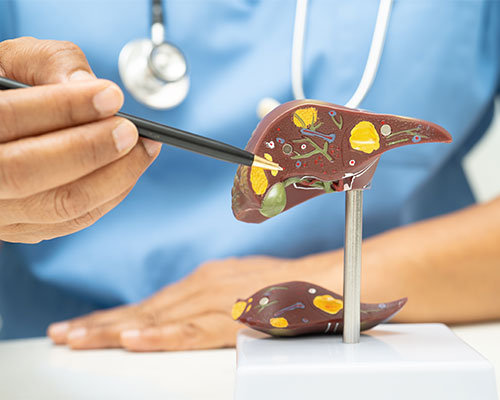
Liver Cirrhosis
This is an advanced liver disease that causes lower production of blood proteins (albumin) and increased abdominal pressure. Therefore, the fluid shifts upward through the diaphragm into the pleural cavity.
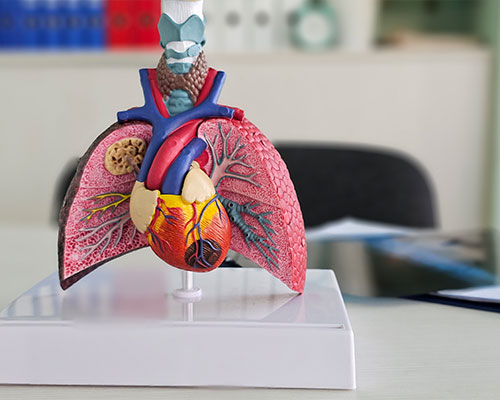
Pulmonary Embolism (PE)
This is a blood clot that travels into the lungs and causes localized inflammation. PE tends to trigger sudden fluid buildup in the pleural space.

Congestive Heart Failure (CHF)
This is another leading cause of pleural effusion, which involves increased back pressure in the blood vessels. The pressure forces watery fluid to leak into both lung spaces.

Malignancy (Cancer)
Cancers involving the lungs, pleura, breast, or other organs can cause pleural effusion by blocking lymphatic drainage or increasing fluid production within the pleural cavity.
Symptoms of Pleural Effusion
As part of offering the best pleural effusion treatment in Siliguri, Dr. Abhishek Bali prioritizes symptom awareness as well. This is because the early symptoms can be easily mistaken for less serious, everyday health concerns. Here are some common symptoms of pleural effusion that you must not ignore:
Here are the common symptoms that require immediate evaluation from a chest doctor:
Progressive Shortness of Breath
The process of fluid buildup compresses the healthy lung tissue, which in turn makes it harder to breathe.
Persistent Dry Cough
The pressure of fluid buildup against the lung tissue and airways triggers a persistent dry cough reflex.
Hiccups & Chest Heaviness
Pleural effusion causes diaphragm irritation, which triggers hiccups. In addition, a persistent feeling of weight, fullness, or pressure inside the chest wall is common.
Unexplained Fever & Chills
Fluid accumulation caused by TB or pneumonia is often accompanied by spikes in body temperature and chills.
Orthopnea
This symptom is based on patients finding it difficult to breathe while lying down, which is due to fluid buildup creating pressure on the lungs.
Chest Pain
Pleural effusion may cause sharp or aching chest pain that often worsens during deep breathing, coughing, or sudden movements.
Step-By-Step Diagnostic Procedures of Pleural Effusion
Dr. Abhishek Bali uses a systematic, multi-step clinical approach to confirm the presence of fluid buildup in the pleural space. This is because pleural effusion is a symptom of underlying disease. Here are the steps typically followed in the diagnosis:
Clinical Evaluation & Physical Examination
A detailed review of your medical history is done. In addition, a targeted physical exam is performed to look for structural changes in the chest.
Diagnostic Imaging
Chest X-Rays, thoracic ultrasound, or a CT Scan is done to confirm the presence, location, and volume of the fluid buildup.
Thoracentesis
If the cause of pleural effusion remains unknown after the initial diagnostics, a small fluid sample is drawn using a thin needle, which is performed under local anesthesia.
Laboratory Analysis
In this step, the fluid sample undergoes biochemical and microscopic testing. This is done to confirm whether the condition is fluid imbalance or fluid inflammation.
Thoracoscopy
This diagnostic technique is used when the cause of exudative effusions remains unknown. A small camera is inserted through a tiny keyhole incision into the chest wall, which allows inspection of the pleural space directly and the taking of highly targeted biopsies of abnormal tissues.
Treatment Options for Pleural Effusion
After confirming the diagnosis, Dr. Abhishek Bali creates a personalized treatment plan based on the underlying cause, severity of symptoms, and amount of fluid accumulated around the lungs. The primary goal is to relieve breathing difficulty, remove excess fluid, and prevent recurrence.

Ultrasound-Guided Thoracentesis
Thoracentesis is a minimally invasive procedure used to remove excess fluid from the pleural space. Dr. Bali performs the procedure under real-time ultrasound guidance, which improves safety and precision while providing immediate relief from breathlessness and chest discomfort.

Medical Pleuroscopy
For recurrent or unexplained pleural effusions, medical pleuroscopy may be recommended. This advanced procedure allows direct visualization of the pleural cavity and helps obtain tissue biopsies while also assisting in treatment planning.

Treatment of Underlying Infections
When pleural effusion develops due to tuberculosis, pneumonia, or other infections, targeted medications are prescribed to eliminate the infection and prevent further fluid accumulation.

Advanced Critical Care Support
Patients experiencing severe respiratory distress may require hospitalization and close monitoring. Dr. Abhishek Bali works with advanced ICU facilities at Maxwell Hospital to manage complex and emergency cases safely.
Testimonials

Sreejita Chatterjee, Siliguri
Sujit Roy, Siliguri
Nupur Das, Bagdogra

Frequently Asked Questions
- Q. Is pleural effusion life-threatening? Answer: A pleural effusion can become dangerous if left untreated. While the fluid accumulation itself can be quickly managed, clinical data show that hospitalized patients face an overall 30-day mortality rate of roughly 15% due to serious underlying causes.
- Q. Is the fluid removal procedure painful? Answer: Dr. Abhishek Bali performs fluid aspiration under local anesthesia to completely numb the skin and chest wall. In addition, he uses real-time ultrasound guidance for the procedure, which ensures the needle is placed with maximum precision and safety, along with minimizing patient discomfort.
- Q. How to book an appointment with Dr. Abhishek Bali for pleural effusion treatment in Siliguri? Answer: You can either call +91 98008 22187 (Dr. Abhishek Bali’s appointment booking number) or 0353 352 1700 (Maxwell Hospital’s dedicated appointment booking number). For emergencies, you can call Maxwell Hospital’s dedicated emergency number 0353 352 1721.
- Q. Will the pleural effusion come back after fluid drainage? Answer: Yes, if the underlying disease causing pleural effusion remains untreated, the fluid accumulation can keep recurring. Dr. Abhishek Bali performs a minimally invasive procedure called medical pleuroscopy (thoracoscopy), which is based on looking directly inside and taking accurate tissue biopsies by inserting a tiny camera through a keyhole incision into the chest wall.
- Q. Can pleural effusion be cured permanently? Answer: Yes. If the underlying cause is identified and treated properly, pleural effusion can often be permanently resolved.
- Q. What is the fastest way to remove fluid from the lungs? Answer: The fastest and most effective treatment is thoracentesis, a procedure that safely drains excess fluid from the pleural cavity.
Online Enquiry

Dr. Abhishek Bali
MBBS, MD (Respiratory Medicine)
Consultant- Pulmonary Critical Care & Sleep Medicine